
Moving out of a walk-up: the playbook
Kirribilli, McMahons Point, Lavender Bay, the older streets of Neutral Bay: thousands of good flats, not a goods lift among them. Here's how a stair move goes right, whether we're carrying or you are.
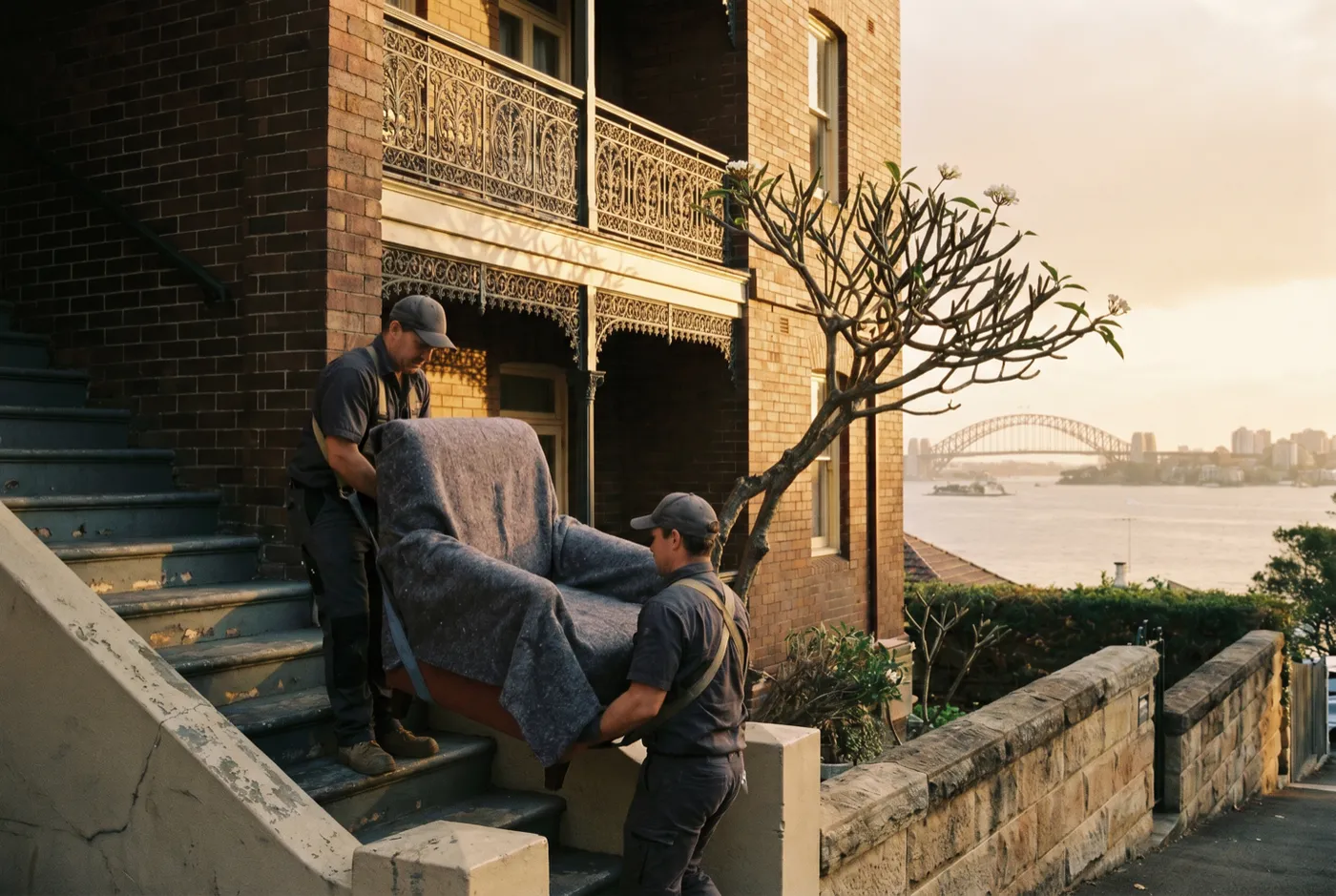
The two battles: the stairwell and the street
A lift move is a logistics problem; a stair move is a physics problem with an audience. Everything below splits into protecting the inside (the stairwell, the furniture, your bond) and winning the outside (somewhere legal, close and safe for the truck). Get both right and a third-floor two-bed is a perfectly civilised morning.
Inside: dress the stairwell before anything moves
- Pad the pinch points. Stair nosings, the half-landing corner, banister ends and both sides of every doorframe on the route. In a rental this is your bond insurance; in a heritage block it's basic manners.
- Clear the route completely. Doormats, pot plants, shoes, the bike in the hallway. A stair carry fails at ankle height.
- Wedge the doors. Every self-closing door on the route gets a wedge or a person. A fire door swinging into a carried sofa is the classic walk-up incident.
- Measure the tight turn once, honestly. The half-landing turn is the gatekeeper: if the sofa's diagonal beats the turn's diagonal, feet come off, or it goes another way. Ten minutes with a tape beats an hour of wedged-sofa geometry.
- Wrap before the carry, not at the truck. Blankets and film go on in the flat. Every surface that touches a wall on the way down should be soft.
Outside: the street is half the job
- Read the signs the day before, the whole block, both sides. Clearway hours, loading zones, permit zones. The spot that's legal at 10am can be a tow-away at 3pm.
- Closer beats bigger. A compact truck at the door loads faster than a huge one around the corner. Two trips with a short carry usually beats one trip with a long one; it's the carry metres that eat the morning, not the driving.
- Mind the driveways and the neighbours. Villages run on goodwill. A note under nearby doors the day before ("truck out front Saturday morning, sorry and thanks") costs nothing and buys patience. North Sydney Council's parking rules apply to moving trucks like anyone else; nobody official reserves a kerb for goodwill alone, so plan within the signage (see references).
The walk-up rule of thumb: every flight of stairs roughly adds what a booked goods lift saves. It's honest hourly time, not a surcharge, and it's why the crew-size question below matters more here than anywhere.
Carry order: heaviest first, boxes last
Fresh legs take the sofa, the fridge and the wardrobe; tired legs can still carry books. Load the truck so the big rigid pieces form the walls and the soft stuff fills the gaps, and the whole flat rides in fewer trips than you'd guess. This is also the honest answer to "should we help?": yes, by having every box packed, taped and stacked by the door before the crew arrives. Box-shuttling is the one part of a stair move anyone can do; the awkward-furniture ballet is the part worth paying for.
When a third mover saves you money
Counterintuitive but true: on a two-flight-plus walk-up, adding a third mover often lowers the total. Two movers carry while one stages and loads, the relay never stalls, and the hours drop by more than the rate rises. We price both options on request as a matter of course; the arithmetic is yours to see. Rates are on the rates page: $250/hr for two movers and a truck, $350/hr for three.
Or hand us the stairs
This playbook is exactly what our village crews do every week, from the padding to the neighbour notes. Tell us the suburb, the floor and the flights, and we'll bring the plan and both quotes. Start with village & walk-up moves, or go straight to the form.
References. Kerbside parking in this pocket is governed by North Sydney Council signage and rules; check the current signs on your street rather than relying on habit. Strata rules still apply to common stairwells in walk-up blocks; the framework is on the NSW Government strata hub.
Ready when your building is
Tell us the building. We arrive with the plan made.
Two minutes on the form: where you're moving, roughly what's coming, and the week you're aiming for. We call you back, talk to your building manager if there is one, and lock the window.